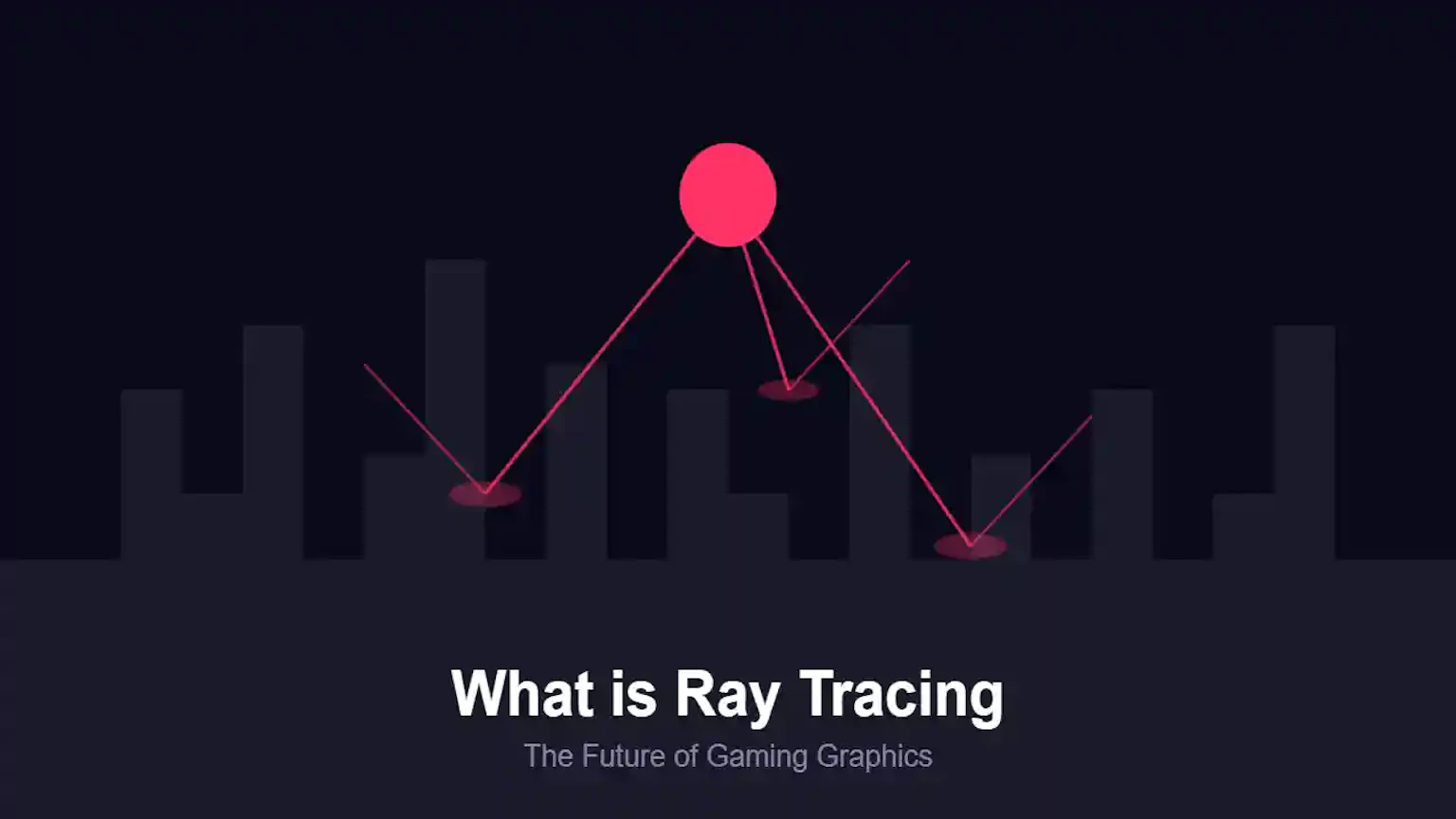
What is Ray Tracing? The Graphics Feature Breaking Even the Most Expensive Gaming PCs Ray Tracing's Heavy Toll: When Light Breaks Your Gaming PC
Last night I watched my RTX 4090 - a graphics card that costs more than some used cars - wheeze through Alan Wake 2's neon-lit streets. The culprit wasn't some massive explosion or a screen full of enemies. It was light itself, bouncing off puddles and filtering through fog. Welcome to the world of ray tracing, where creating realistic lighting has become gaming's most expensive magic trick.
Digital Foundry's Mark Daly recently broke down why this technology hits our hardware so hard. "Ray tracing completely changes the rules," he explained during a detailed analysis stream. "Your GPU isn't just applying pre-baked lighting anymore - it's calculating how millions of light rays bounce and interact with every surface in real time. No wonder even a 4090 breaks a sweat."
Want to see the impact? Boot up the new Cyberpunk 2077 Ultimate Edition. With ray tracing off, Night City looks impressive. Turn it on, and suddenly every puddle reflects neon signs perfectly, glass windows show accurate reflections, and shadows dance realistically across walls. The catch? Your frame rate might drop from 144fps to 60fps - if you're lucky.
NVIDIA's hardware team, naturally, sees this challenge as an opportunity. "We've doubled ray tracing performance with each generation," claims chief architect Jensen Huang. At their latest tech showcase, the team demonstrated how the 4000-series cards handle these calculations dramatically faster than their predecessors.
AMD takes a more measured stance. "Current ray tracing is like using a sledgehammer to hang a picture," says chief gaming architect Frank Azor. "We're working on smarter approaches that won't require such brute force computation."
Meanwhile, developers keep finding creative uses for the technology. Portal RTX transformed the game's sterile test chambers into showcases of dynamic lighting. Minecraft RTX proved even simple block-based worlds can look photorealistic with proper light simulation.
But peek at Steam's hardware survey and reality sets in - most gamers still run mid-range cards that struggle with basic ray tracing. As Metro Exodus developer 4A Games noted recently, "We're building games for tomorrow's hardware while trying to keep them playable on today's systems."