88,337. That was the peak. Marathon launched March 5, 2026 and hit that number on Steam within days. A few weeks later it was idling in the low-to-mid teens of thousands. That kind of drop is normal for a live-service game. It is also the thing nobody wants to say out loud when they are selling you on a multi-year story roadmap.
Julia Nardin is selling one anyway. Bungie's creative director has been doing the rounds. GamesRadar+, VGC, Kotaku. She is laying out a narrative plan for Marathon that stretches years ahead on the planet Tau Ceti IV. The core mystery of what happened to the original colonists and the UESC Marathon ship is locked. Set in stone. New players and old can piece it together through environmental storytelling, data fragments, audio logs, faction contracts, codex entries, cutscenes with voice talent that nobody expected. Nardin says the team knows where the story is going.
And then she says the players will help write it.
A studio that spent two decades building authored campaigns — Halo, Destiny's big expansions — is now making a game where the backstory is fixed and the future is supposedly up for grabs. This does not sit neatly. The original Marathon put tens of thousands of colonists on a ship called the UESC Marathon bound for humanity's first extrasolar settlement on Tau Ceti IV. It was Bungie's 1994 cult series, the one that made their reputation before Halo existed. The journey took centuries, time enough for every structural weakness to surface. The ship's AI, Durandal, went rampant. A kind of digital psychosis that made it dangerous and unpredictable. Then the alien Pfhor invaded. Catastrophe, in the old sense of the word.
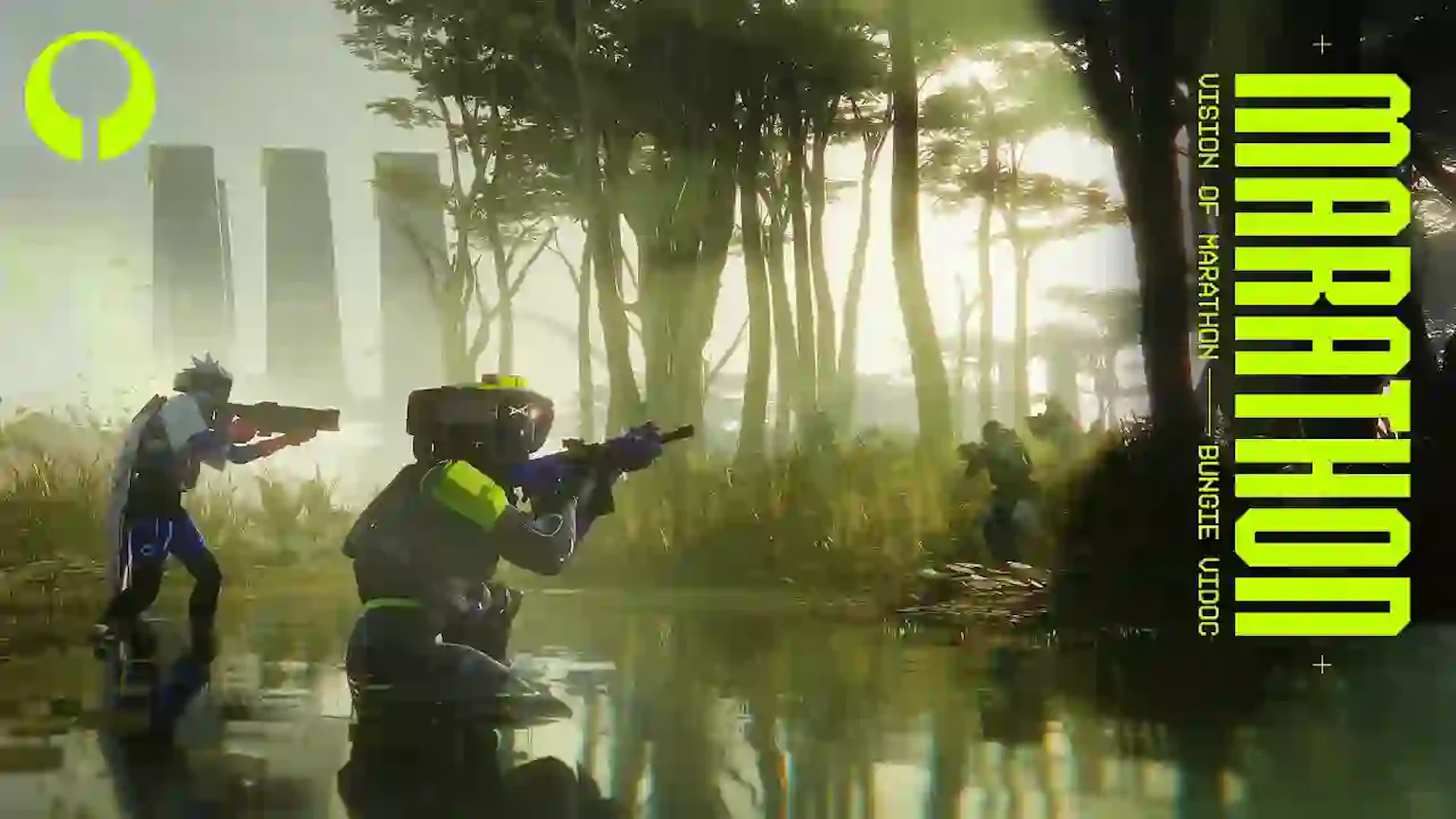
The 2026 version picks through the wreckage. Players are Runners, bio-cybernetic mercenaries who had their consciousness copied into customizable shells. You can die and come back, though the game gestures at a cost it never names. It charges something for the privilege. Nardin's team keeps gesturing at a personal cost the game never quite spells out in promotional materials. Either a narrative thread they are saving, or a premise they have not finished thinking through.
You scavenge. You loot text files and logs. Game Director Joe Ziegler says the extraction loop is the primary delivery mechanism for discovery. Faction contracts drag you into conflicts between Earth and Mars corporate interests, rogue AIs. Characters who are new to the universe, mostly. Senior Art Director Brian Vinton describes the aesthetic as "graphic retro futurism." Apparently that means industrial sci-fi run through a distortion pedal. Cyberpunk, digital dithering, techwear, things that feel off in ways that are hard to name. The team tore apart the original games' designs and rebuilt them with modern rendering. Not restoration. Deconstruction.
The Destiny problem
Then there is the Destiny problem. Bungie vaulted huge chunks of Destiny 2's story content to keep the file size manageable. In doing so they made the game illegible to anyone who arrived late. Nardin cites this directly. She says seasonal story content in Marathon is designed to be evergreen. A player who starts in year three can pursue the same questlines as someone who was there on day one, fill out the Codex, track the mysteries. They should not feel like they missed a dinner party where all the important conversations already happened.
What a season looks like
Seasons run roughly three months. New maps, weapons, implants, enemies, upgrades like something called "The Cradle" system, narrative beats. The early ones have names like "First Step" and "Nightfall" with associated maps and modes. The backstory of Tau Ceti's downfall is "locked." What comes next is supposed to flex around what players actually do.
You get a framework. You can influence things inside it, but you do not get to burn it down. Nardin called player input "part of the magic of playing a live service game." The kind of thing someone says when they are trying to sound less in control than they actually are.
Marathon was supposed to arrive in 2025. It slipped. When it finally landed in March 2026, roughly 2.2 million players showed up across PC, PlayStation 5, and Xbox Series X|S in the first month. About 1.1 million on PC, the rest split across consoles. Sales estimates settled around 1.2 million units early on. Steam concurrents are now in the low-to-mid teens of thousands. Community sentiment praises the tactical gunplay and lore depth. The complaints cluster around anti-cheat, solo options beyond Rook mode, balance, and onboarding. Standard friction points for a genre that is still figuring out how to let people in without breaking what makes it tense. The launch numbers tell a story the interviews do not.
The Siege comparison
Bungie has been issuing regular updates. Combat passes, UI revisions, the occasional content drop. Studio leadership talks about improving Marathon "steadily for many years." No content vaulting. Full cross-play and cross-save. The pitch is persistence. A world that accumulates rather than cycles.
Lore enthusiasts get deep ties to the 1994 trilogy. Durandal, the Pfhor, the colony ship. Newcomers get self-contained entry points. The parallel narratives are ambitious: what it means to have a copied consciousness, corporate exploitation of bodies that cannot stay dead, AI ethics, the psychological toll on people who keep coming back. Nardin says the focus extends beyond Tau Ceti IV to the factions on Earth and Mars, to what it costs a Runner to keep running.
Specific plot details are under wraps. The shape of what is coming includes further revelations about Durandal and other AIs, the fate of the original colonists, external threats. Whatever happens to the ecosystem when thousands of functionally immortal mercenaries keep picking it clean. Bungie's approach is steady smaller updates. Not the seasonal avalanches that burned out Destiny players, not the infrequent expansions that starve a community between drops. The comparison floating around internally and externally is Rainbow Six Siege, a game that started modest and iterated its way into a decade of relevance.
Whether Marathon follows that arc is the open question the multi-year plan is supposed to answer before anyone has to ask it. The foundation is locked. The direction is set. And somewhere between those two things, a community of players is supposed to matter. "First Step" and "Nightfall" are live now. The seasons run roughly three months. What the concurrent player count looks like when the story is supposed to start diverging is not a number Bungie has shared.