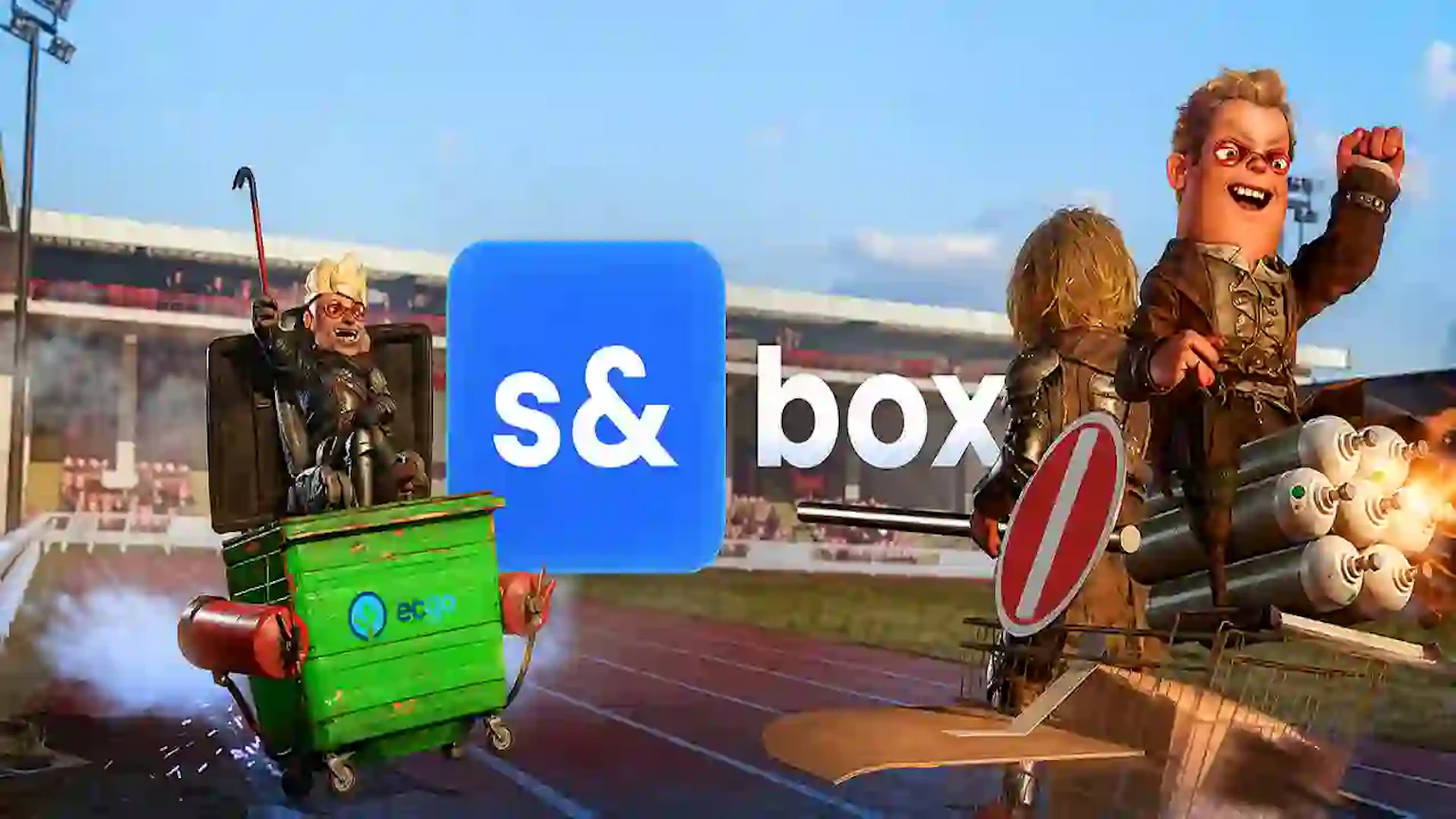
s&box comes to Steam on April 28, 2026 with a Play Fund that has already pushed more than 500,000 to developers, and Facepunch is unusually blunt about why it likes the arrangement. "This isn't as extreme as others but it'll grow and is sustainable, since we don't have to fire 1000 people to keep it working." The line sounds half proud and half defensive. That ambiguity may be the point.
Facepunch Studios built Garry's Mod and Rust, so the company has some leverage when it talks about creator tools. s&box is the next bet. People pronounce it "sandbox". It has been framed as the spiritual successor to Garry's Mod, but the pitch is bigger than nostalgia. This is a full game-creation tool built on a heavily modified version of Valve's Source 2 engine, and Facepunch has spent years dragging it through preview builds toward launch.
Garry's Mod still matters because it taught a generation what user-generated play could look like. Released in 2004, it has sold millions of copies and turned the Source engine's physics and assets into contraptions, role-play scenarios, and mini-games that nobody could have planned from the top down. Garry Newman founded Facepunch, and the studio built a huge modding culture without the usual corporate chokehold around it.
What s&box is built to do
s&box tries to carry that instinct into something cleaner and more modern. Inside the platform, it is both a playable sandbox and a development environment, with hundreds of community-made games already living there. Shooters, platformers, puzzlers, racers, the whole usual junk drawer. The editor is meant to feel immediate, and the hot reload loop is the reason. Hot reloads happen in milliseconds, which is the sort of thing that keeps a tool from feeling dead. Multiplayer is built in from the start, so the weird social parts of a game are part of the workflow instead of a later add-on. C# is there for rapid prototyping, and sharing a finished piece is supposed to be close to frictionless. The engine code is open-source under MIT. Facepunch keeps it on GitHub. People can pull at it, change it, and send it back.
Facepunch recently ended the developer preview and opened access publicly again before the full Steam launch. That is the sort of detail that sounds minor until you remember how many projects disappear behind closed doors before they ever reach players. Source 2 brings better visuals, physics, and performance, while the newer tools lower the barrier for people who want to build without first learning a mountain of engine trivia.
How the Play Fund pays creators
The funding model is stranger than the launch pitch. The Play Fund creates a daily pool and distributes it to games and maps based roughly on clamped individual player hours, so the system is chasing engagement rather than raw player count or a skin-shop frenzy. The pool is fed by cosmetic sales, with money flowing to Valve, the people who made the items, and Facepunch, whose cut helps keep the fund alive and growing. Facepunch says the Play Fund has already paid out more than 500,000 directly to the community. Earlier figures sat around 180,000 in November 2025, then climbed toward 480,000 to 500,000 near launch. One developer reportedly made 67,000 before the Steam release even happened. "Developers should get paid for their games, so that's what we're doing... it'll grow and is sustainable," Facepunch says.
The comparison everyone reaches for is Roblox, where the platform cut is often cited at around 70 percent in some contexts. Facepunch wants no hidden fees or rug pulls for creators who stay inside s&box, and it says payouts will scale as the player base does. That is a lot less cynical than the average industry monetization pitch. People still squint at it because the numbers have to hold up.
Valve lets creators export to Steam
The other break with the usual model arrived in March 2026, when Facepunch finished a licensing agreement with Valve that lets creators export their s&box work as standalone Steam releases. Facepunch takes no royalties here. Valve doesn't take an extra cut tied to s&box or Source 2 usage. The export stands on its own. The exported game is yours, right down to the naming rights and the revenue, aside from Steam's normal fee. Facepunch's site puts it this way: "Coming soon: export and release your s&box games as standalone titles on Steam. Completely free, no royalties, no strings. Your game, your name, your revenue." That makes s&box feel less like a closed toy and more like a prototype shop that can spill into a real release.
That distinction matters because Facepunch is leaning on its own business history here. Facepunch points to Garry's Mod as proof the model can scale. It has sold over 25 million copies. Rust has generated serious money for the studio too. Annual revenue is estimated in the 100 million range, mostly through Steam, and the studio sits at around 100 employees, with a high share of them working on games rather than administration. Garry Newman still owns the place. That independence lets Facepunch chase a longer timeline than most publishers can tolerate, and the "sustainable" language about the Play Fund sounds like a swipe at the bigger outfits that have trimmed thousands of jobs to protect margins.
People are expecting s&box itself to land in the 10 to 20 range on Steam, though some talk still floats around eventual free access. The Steam page already files it under Action, Adventure, Casual, Indie, and a few other buckets, with Free to Play elements in the community-driven side. The buzz has spilled across Reddit, X, and gaming news sites, where the royalty-free export is the headline and C# has its own small fan club because it works well with AI-assisted coding when you want to prototype fast. Trailers have helped too. The physics look satisfying. The visuals are clean. The whole thing has the weird toy-box appeal that can send modders into a frenzy.
The pushback around cosmetics and performance
Not everyone is buying the pitch without a flinch. Some Steam discussions have already started complaining about cosmetic skins and what looks, to them, like pay-to-access aesthetics. Others compare the setup to more established UGC platforms and stop there. Performance questions are still hanging around because Source 2 can be heavy. A few people worry about where creator incentives end and player experience begins. Facepunch says nothing is locked yet and that it wants to reward engagement without wrecking the fun.
The bigger context is ugly enough that s&box may benefit just by existing. Engine royalties, platform cuts, and marketing bills have made indies feel like they are pushing uphill with a broken cart. Roblox is the obvious comparison, both because of its reach and because its take is often cited at around 70 percent with limited export options. Unity's runtime-fee mess and the economics around the Epic Games Store have only made Facepunch's no-royalty export deal look sharper. The company keeps talking about making games without the bullshit, and in this case the slogan sounds less like branding than exhaustion.
If s&box catches on the way Garry's Mod did, it could spawn mini-games, role-playing communities, and full projects that start as experiments and end up as real Steam releases. The open-source code could grow in the margins too, with support for larger player counts or more advanced features if the community keeps pushing. The launch is still set for April 28, 2026.