The patent examiner didn't boot a single video game. Every piece of prior art came from earlier patent documents—four of them, published between 2002 and 2022. The oldest was Konami's. The most recent was Bandai Namco's. And sitting right at the center of every invalidity theory, acting as the foundation, was Nintendo's own Taura application from 2019, published in August 2020.
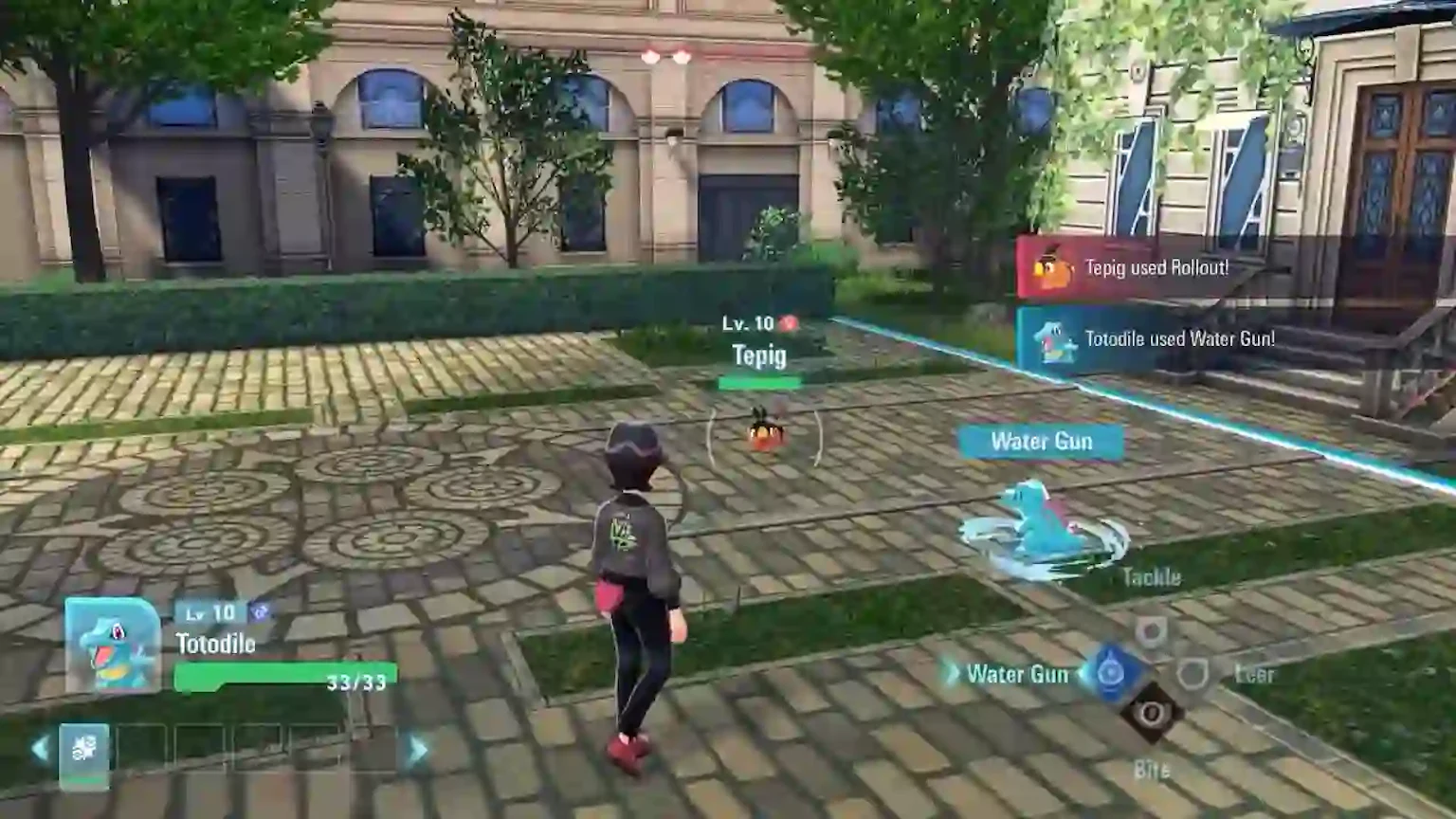
On March 26, 2026, a USPTO examiner delivered a 104-page Office Action rejecting all 26 claims of U.S. Patent No. 12,403,397 as obvious. The patent was granted last September. It listed Nintendo Co., Ltd. and The Pokémon Company as assignees, with Shigeru Ohmori credited as inventor. The claimed system let players summon a "sub-character" to fight alongside them—either automatically or under direct manual control, depending on whether an enemy happens to be standing where the creature appears. It's the kind of mechanic that sounds specific but reads broad enough to potentially cover Pikmin, Persona summons, and just about any monster-taming game where a companion fights while the player moves freely.
Why the rejection matters
This is the patent that had the industry talking. When Games Fray first highlighted its potential overreach back in September 2025, developers and fans worried it could chill innovation across an entire genre. The timing was sensitive. Nintendo was already in court with Pocketpair, the developer behind Palworld, in a high-profile Tokyo lawsuit initiated in 2024. Some legal experts wondered if this patent might become part of that arsenal.
What almost no one expected was the USPTO director himself stepping in. On November 4, 2025—barely two months after the grant—John A. Squires personally ordered an ex parte reexamination. It was the first time since 2012 a USPTO director had initiated such a review without a formal request from a third-party challenger. Japanese patent experts called it "striking" and "extremely rare." Out of roughly 15,000 ex parte reexamination requests since 1981, only about 175 have been granted.
Squires cited "substantial new questions of patentability" based on earlier published patent applications—specifically the dual-mode (auto vs. manual) sub-character combat alongside the player.
The invalidity theories
The examiner's final breakdown laid out two alternative invalidity theories.
Theory one covered 18 of the 26 claims. Either Taura combined with Yabe—the Konami reference describing a sub-character that fights automatically or under manual control—rendered them obvious. Or Taura combined with Motokura, a Nintendo filing from 2020 covering character positioning during gameplay transitions, did the same.
Theory two handled the remaining eight claims. Adding Shimomoto—the Bandai Namco reference providing the missing link on NPC summoning logic and precise placement—sealed the deal under either theory.
The irony is sharp. Nintendo's own earlier work, combined with decades-old ideas from Konami and a contemporary Bandai Namco filing, made the "new" invention non-novel to a person of ordinary skill in game development.
A related Japanese application in the same patent family was rejected back in October 2025. Examiners there cited actual games like Ark: Survival Evolved as prior art. The U.S. process stayed strictly within patent documents. The examiner never looked at a single commercial implementation.
Former Pokémon Company chief legal officer Don McGowan suggested companies might simply ignore the patent now, given how obviously unenforceable it turned out to be. Video game IP lawyer Kirk Sigmon publicly disagreed with the original grant. He called the claims "in no way allowable" from the start. Even if Nintendo salvages one or two narrowed claims through its response, the scope for enforcement shrinks dramatically.
What's next
Nintendo has two months from the Office Action to respond—longer if it requests an extension, which is an option available in director-initiated reexams. It can amend claims, argue that a skilled game developer wouldn't have found it obvious to combine these disparate references, or present secondary evidence of non-obviousness like commercial success or long-felt need. If the examiner issues a final rejection, the company can appeal to the Federal Circuit.
As of April 2026, the patent remains in limbo. Nintendo has yet to comment publicly on its response strategy.