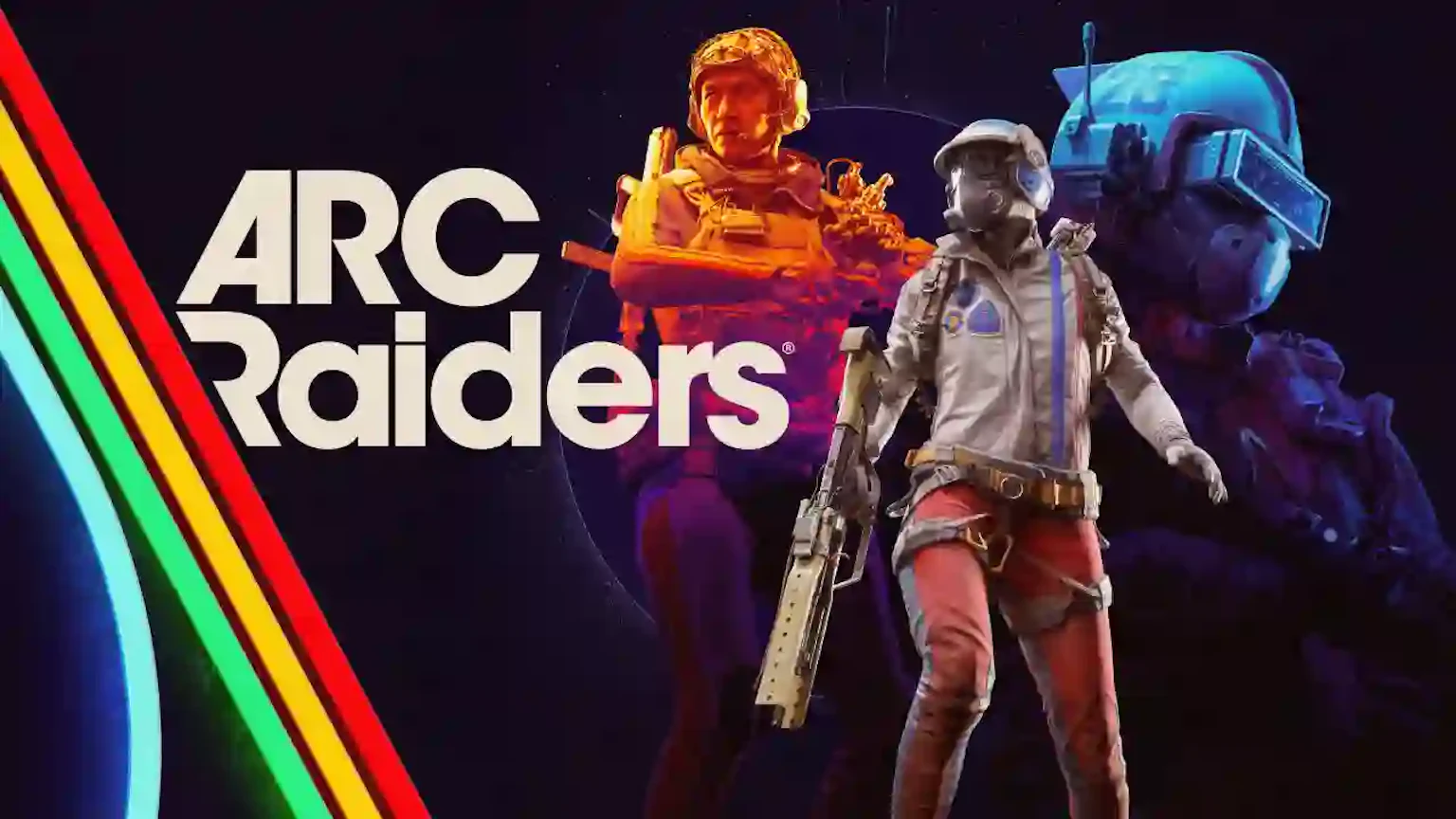
Arc Raiders' ARC machines are not learning from your raid in real time. Embark keeps changing them offline after watching clips, streams, and the habits players keep repeating.
The rumor machine
Arc Raiders launched on October 30, 2025. It was a free-to-play PvPvE extraction shooter, and that launch date sits underneath the whole robot myth. The ARC machines are hostile invaders from space, named for their radar signatures, and they have overrun Earth's surface. Humanity is down in bunkers like Speranza. The Rust Belt is the part of the world they are stripping clean.
Raiders head out solo or in trios, loot caches, scavenge ARC parts for upgrades, and try to extract before rival players or the machines close the net. Dam Battlegrounds, Buried City, Spaceport, The Blue Gate, and the indoor Stella Montis each carry their own mix of danger, from lumbering legged units to swarming aerial drones, and the maps feel restless because they are meant to.
The rumor that the ARC learn from players in real time keeps doing the rounds anyway. It is an easy story to tell when a robot punishes the exact corner you just used or shows up in the one place you thought was safe, but Embark has been pushing back on it for a while. The machine learning behind much of the enemy movement is not online during play, and it is not reacting to your specific raid as it happens. The studio watches clips, streams, and community behavior, then changes the AI offline. The goal is plain enough to say and hard enough to do. Keep the game fresh, surprising, and mean.
One developer put the target in much cruder language. They watch for moments that make players "squeal" and then try to make that happen again.
What changed in flashpoint
The clearest sign of how Embark works showed up in the Flashpoint update around late March 2026, when the studio added Close Scrutiny, a major ARC Operation that sits above weather modifiers like Cold Snap and Hurricane. It turns exterior maps into a different kind of raid. Assessors land across the zone. They are massive ARC probes and they throw yellow light into the sky like they are calling a meeting. Loot gets thinner. ARC presence gets heavier. There are no locked doors to duck behind, and Vaporizer patrols guard the probes' high-value loot matrices while the whole operation tilts toward coordinated or cutthroat fights over the Assessors themselves.
Martin Singh-Blom gave the technical version at GDC 2026 in a talk called "Learning to Move: Physics-Based Enemy Locomotion in ARC Raiders." He is Embark's Machine Learning Research Lead. He joined Embark in 2019. He leads a small team that pulls directly from robotics literature. The studio moved away from traditional animation clips and hand-tuned logic because legged robots that can be shot, pushed, or toppled do not stay polite for long. In Unreal Engine 5, the ARC use reinforcement learning plus physics-based control and animation to learn how to walk, run, stumble, recover from impacts, and fight with intent. The motion comes out of experience rather than scripts, and a point-cloud perception system lets them see the world with much more fluidity.
Singh-Blom said the team wanted emergent gameplay because it gives the game replayability. He also said they wanted "big robots that walk around and interact physically with the world." Traditional pathfinding breaks down once the body is complex enough. Reinforcement learning handles the hard part, the foot placement and balance and locomotion that would otherwise shatter against the simulation. Behavior trees and utility AI decide things like "advance on the player." The ML layer deals with the rest.
Training is not fed directly by live player data. Instead, it happens in randomized scenarios, with object placements, obstacles, and disruptions changing from run to run so the behaviors hold up across maps. One of the examples Embark pointed to showed a player ducking into a tight tunnel to shake a Leaper, and the machine simply lost the thread. It could not see or path properly in cramped indoor space. The old grid-based height measurement worked outdoors and fell apart indoors, so Embark replaced it with point-cloud perception and better locomotion training. The result is that Leapers and similar legged units can squeeze through gaps, scramble down pipes, and work their way through interiors with intent. Players now see them bait people out of cover, limp after leg damage, and turn up in places that make no sense until the explosion has already happened.
The drones keep pushing in
The same observation loop is shaping the flying ARC too. Wasps, Hornets, and the post-launch Fireflies do not use ML locomotion. They rely on traditional control systems, but Embark keeps pressing on their indoor behavior anyway. Singh-Blom said, "We've done similar things with the indoor flying behaviors." He added, "We keep trying to make the flying drones better and better at flying indoors." His point was plain. If players think a building is safe, the studio wants the drones to find a way in and make that space less safe.
That shows up in clips from after Shrouded Sky and Flashpoint, where Hornets and Fireflies peek into buildings, coordinate with ground forces, or barrel-roll to shake off hitchhikers. Wasps and Hornets patrol smarter now. Fireflies were added in the February 2026 Shrouded Sky update. They are the floating nightmare version of that idea, the one that closes distance and burns you down with flames. Reddit and YouTube are full of players saying the drones hate them or have learned their hiding spots. Embark says it is less mysterious than that. The studio is spotting patterns and training more robust indoor navigation in offline sessions.
There is also a quieter piece hiding under all of this. It is a "magic" system that steps in when pure physics cannot guarantee the robot keeps coming. Singh-Blom described it as a behind-the-scenes cheat. The invisible nudges can lift a toppling robot or keep one from getting stuck forever. They are there to preserve the illusion without pretending the game is a perfect physics simulator. That is what lets a Leaper recover after a shotgun blast to the leg, or a drone right itself in mid-air after taking fire, while the match still feels fair enough to keep playing.
Embark has kept pushing that blend forward after launch. The studio also made The Finals and built its reputation on physics and destruction. It has rolled out updates like North Line, along with balance tweaks that keep changing the shape of the battlefield. Singh-Blom says ML research is still going in the background. He wants more perception for tighter indoor navigation, more learned decision-making, and even stranger experiments, like rope-based takedowns inspired by the AT-AT scene on Hoth. "Those of us who really work with the physics... want more physics in the game at every turn," he said, though design still blocks some of those ideas.
That is why the community keeps talking about "sentient ARC" even as the studio says the opposite. It is a small ML team, five to 10 people over years, not a giant system secretly training on your raids. The public trail points to a GDC 2026 talk called "Learning to Move: Physics-Based Enemy Locomotion in ARC Raiders," and to a studio that keeps watching the community and asking a human question: "Could we make this change that would really make people squeal?" How far Embark can push the indoor flying work before it tips from spooky to obvious is still the open question.