Bill Gates called it "the new standard in interactive entertainment." That was 1993. The 7th Guest was a horror-puzzle curiosity built by two men in a new studio. It had just started chewing through CD-ROM drives that most people didn't own yet. It would go on to move over two million copies, a number that still feels faintly absurd for a game that asked you to divide cakes and fumble through maze logic inside a haunted mansion.
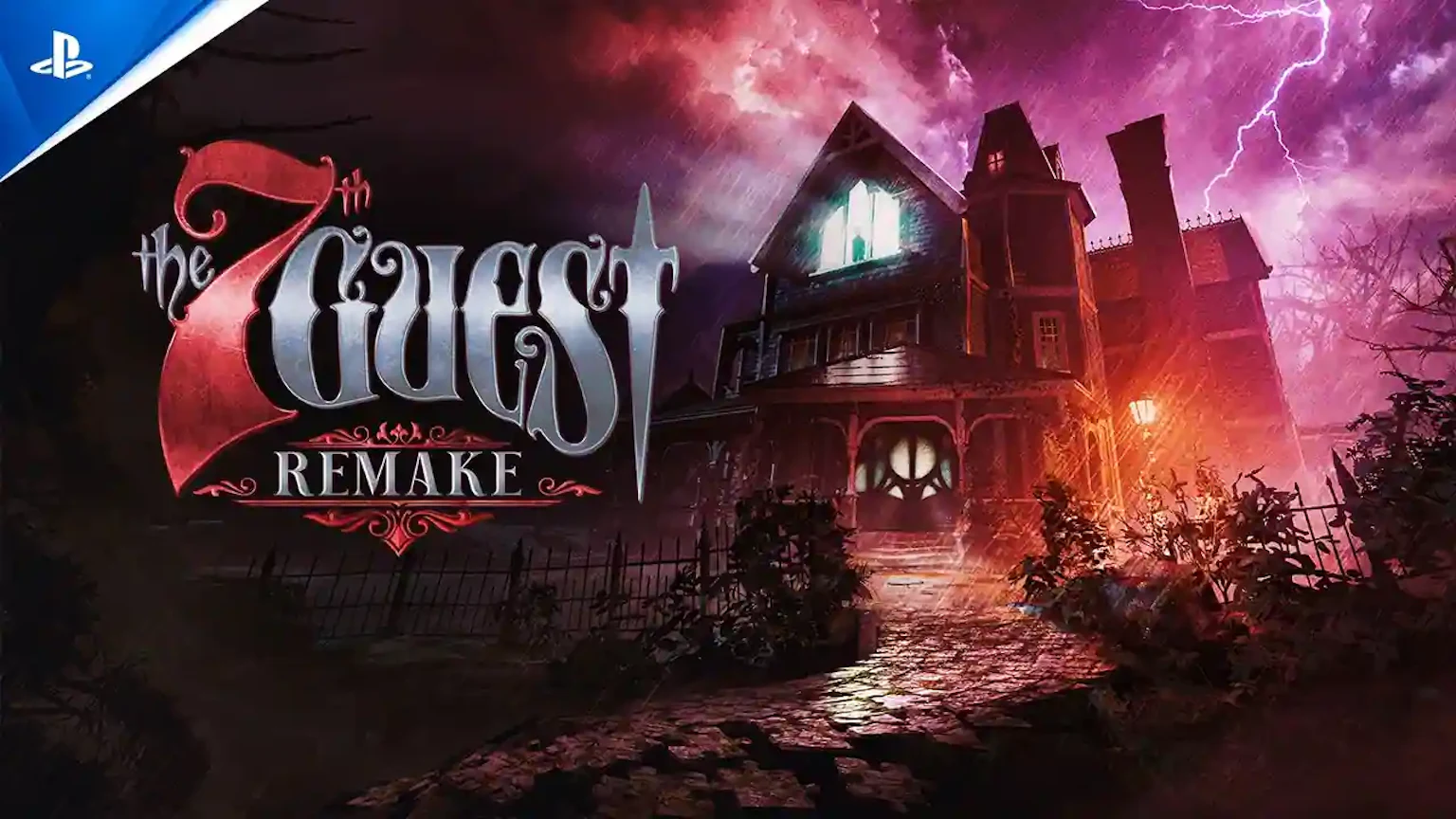
On June 4, 2026, Vertigo Games dropped a full remake onto PC, PlayStation 5, and Xbox Series X|S, priced at 19.99, with a Switch version still dangling without a release date. The same weekend saw other big releases jostling for attention, the usual live-service churn, but this one sits oddly in that company. It is a deliberate, puzzle-driven horror adventure arriving into a decade that has trained players to expect combat passes and procedural loot, not a house that watches you back while you arrange letters on a crypt. The central question is whether a game that once defined forward-looking interactive ambition can still find a pulse when the market has sprinted in another direction entirely?
Watch the launch trailer
The 1993 original that sold CD-ROM drives
The original landed on DOS, April 28, 1993, through Trilobyte, a studio Rob Landeros and Graeme Devine had just hung a shingle for. It was a two-disc CD-ROM affair at a time when a single disc felt ostentatious, powered by the GROOVIE engine's continuous data streaming. Those discs held logic puzzles that ranged from chess problems to cake-slicing geometry, alongside pre-rendered 3D scenes and full-motion video performances, and the horror they built was purely atmospheric, never gory. The plot looped in six guests, each nursing some raw want that Henry Stauf, reclusive toymaker and host, exploited. An amnesiac "Ego" moved through the mansion, unlocking rooms, catching ghostly flashbacks, until the seventh guest's identity twisted everything. Critics praised the ambition, grumbled about steep system requirements, but the sales curve did the rest. It moved 500,000 units by 1994 and eventually two million, turning into a quiet engine behind CD-ROM adoption.
What the remake changes
The premise is preserved as a deliberate choice, down to the same mansion, the same six arrivals, the same dark power. Vertigo and Exkee built it fresh, drawing from the original Trilobyte assets with a kind of reverence that feels unusual for a puzzle game. The old FMV has been replaced by volumetric video. That means live actors were recorded in full 3D space. They walk inside the rooms, not flickering as flat overlays from 1993. It is an approach that grew directly out of Vertigo's earlier work on The 7th Guest VR (2023). There is a cross-buy wrinkle that feels unusually fair: if you already bought the VR version on Steam or PlayStation VR2, you get the flat-screen remake free, and reversing the purchase works the same way. The mansion's visuals shift and buckle, optical illusions and dynamic lighting give the rooms a responsive weight, and the puzzles have been reworked to tangle deeper with story logic, growing more punishing as you advance. Freer 3D navigation opens up corners the static original never let you inspect.
Specs, price, and the bet Vertigo is making
The spec sheet calls for an i3-8600K, an RTX 2060, and 26 GB of drive space. That's modest, not retro. Controller support is there, ratings sit at T and PEGI 16, all the low-excitement detail that only matters if you're still nursing a 2020 GPU. What matters more is the bet Vertigo is placing. It assumes that enough people still want horror that coils slowly, that asks you to solve a microscope puzzle rather than clutch a shotgun. The hint book in the library is long gone, but its spirit lingers in the way the game nudges you forward without breaking its own mood. The mansion's transforming interiors add discovery loops, but the core offer hasn't budged: a house full of secrets that punishes impatience.
There is no critical consensus yet, barely a handful of reviews on launch day. But the decision to ship everywhere except Switch simultaneously, at a price that slips under the 20-buck threshold, says Vertigo isn't hiding from the comparison with 1993. They're staking a claim that the old ideas, the ones that made Bill Gates say something rash about a horror-puzzle game, can still lodge under your skin when the performance comes this polished. Whether that gamble works will settle in the silence of someone leaning into their monitor, realizing the mansion just rearranged a room they already cleared. The Switch date remains an open question.